Where the mind is without fear and the head is held high, Where knowledge is free; Where the world has not been broken up into fragments by narrow
domestic walls; Where words come out from the depth of truth; Where tireless striving stretches its arms towards perfection;
Where the clear stream of reason has not lost its way into the dreary desert sand of dead habit;
Where the mind is led forward by thee into ever-widening thought and action– into that heaven of freedom,
my Father, Let my country awake.
Rabindranath Tagore
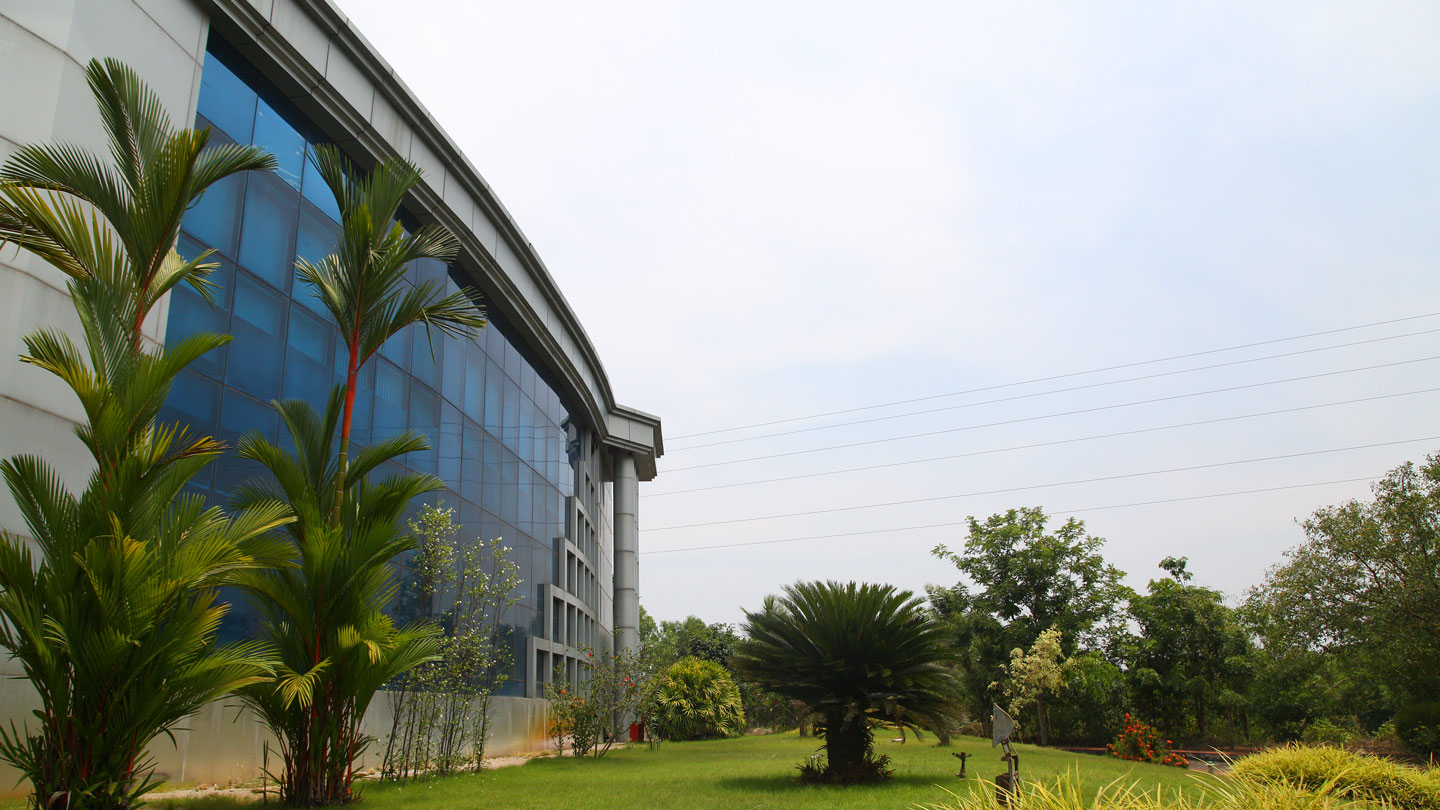
The Rajiv Gandhi Centre for Biotechnology (RGCB) is a growing phenomenon. Located in Thiruvananthapuram, the capital city of Kerala, RGCB began in 1990 amongst humble surroundings as a small charitable society called the Centre for Development of Education, Science and Technology (C-DEST). In 1991, recognizing its potential, the C-DEST was made a “Grant-in-Aid” institute of the Government of Kerala and renamed as Rajiv Gandhi Centre for Development of Education, Science and Technology (RGC-DEST), becoming the first institute in the country to be named after Sri Rajiv Gandhi, the young illustrious and visionary former Prime Minster of India. On April 18, 1994 the Government of Kerala took a landmark decision to restructure the institute into a comprehensive biotechnology center and thus was created the Rajiv Gandhi Centre for Biotechnology. The institute was first managed by the Government of Kerala’s Committee for Science and Technology and Environment (STEC) and subsequently by the Kerala State Council for Science, Technology and Environment. The foundation stone for the new building was laid on November 18, 1995 by the then Prime Minister of India, Sri. Narasimha Rao. Exactly seven years later, on November 18, 2002 the then President of India, Dr A.P.J. Abdul Kalam dedicated the comprehensive center to the nation. Under the guidance of the founding director, Dr M. Ramachandra Das and his successor Dr R.V. Thampan, RGCB rapidly grew in stature, infrastructure and research output. It had now also become apparent that the resources available to RGCB from the state government could not match the strides of progress the institute was making. Kerala’s political leadership displayed its maturity and vision, with three successive Chief Ministers, Mr. E.K. Nayanar, Mr. A.K Antony and Mr. Oommen Chandy persisting with the Union government to develop RGCB into a national centre. By now the institute had also attained national and international recognition with leading discoveries and findings in medical and plant biotechnology
On February 28, 2006 while presenting the Union Budget to Parliament, The Honorable Union Finance Minister, Mr. P. Chidambaram announced, ”If agriculture is an ancient Indian skill, biotechnology is the new frontier that India will conquer. In order to foster research and development in biotechnology, the Ministry of Science and Technology has decided t o accord the status of an autonomous National Institute to the Rajiv Gandhi Centre for Biotechnology, Thiruvananthapuram, Kerala”.
|
|
|
 |
This was one of the greatest acknowledgements that any research center in India can get. RGCB had clearly stood up to the trust, confidence and faith put in it by the Government and people of Kerala as well as the Department of Biotechnology that had unflinchingly supported the center through research grants for almost a decade.
Our long awaited tryst with destiny became a reality on August 2, 2007 when the Union Council of Ministers chaired by the Honorable Prime Minister approved the take over of RGCB from April 1, 2007. Addressing a press conference on the same day, Mr. Kapil Sibal, Honorable Union Minister for Science, Technology and Ocean Development thanked the Government of Kerala for allowing the Union government to develop RGCB into an institute of international standards. He went on to outline the future plans for the institute including state of the art programs in cancer research, dengue & emerging viral infections and nano-biotechnology.
The reincarnation of RGCB as a national institute has allowed a redefining of its research and development programs. Our research programs are now designed clusters of investigations on the central theme of Disease Biology. This framework includes basic and applied programs in human disease, animal disease and plant disease. We have a Cancer Research Program, a Cardiovascular Biology Program, Infectious Disease Biology including emerging & re-emerging viral diseases, Neurobiology, Environment & disease, Reproductive biology and infertility, genetics of disease and the use of chemical biology in disease research. The emergence of avian influenza and prevalence of swine fever in the country has led us to take up research on these animal diseases. Our plant biotechnologists focus on spice genomics to create new approaches for better resistance to disease in the important cash crops ginger and pepper. Studies on bioactives from medicinal plants and understanding their biochemical effects on cells as well as genetic analysis of the exquisite medicinal rice Njavara also form important components in plant biotechnology and disease research.
Intramural and Extramural funding significantly increased. Two new business development ventures with industry partners, one for development of molecular diagnostics and the other for software development in clinical informatics & bioinformatics have been established. RGCB is thus all set to also make its mark as a key player in translation of biotechnology to knowledge economy.
We are now all set to move at warp speed. Our horizons are clear and paths well defined. We will fulfill our task of contributing to making India a knowledge power in biotechnology. Our commitment to Kerala continues with even greater dedication. In addition to providing the judiciary and criminal justice systems with DNA fingerprinting services, RGCB provides state of the art molecular diagnostics for viral diseases, cancer markers and risk markers for cardiovascular and genetic-diseases.
RGCB will reflect the future of Indian Biotechnology. We firmly pledge to fulfill our promise to the nation – ”Delivering Discovery for India” |