|
Dr. M.R.Das
Founder Director, Rajiv Gandhi Centre
for Biotechnology. |
|
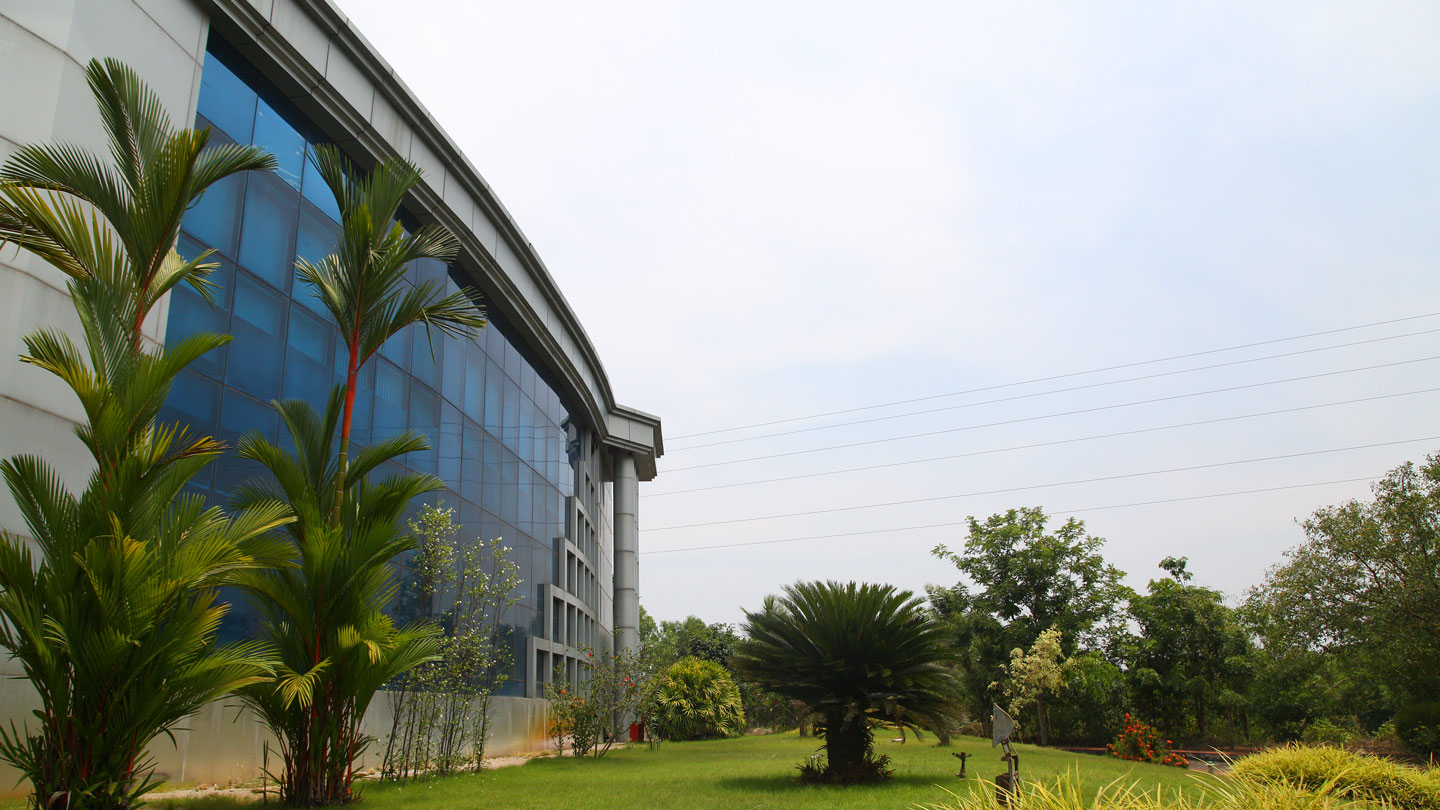
It was the vision, foresight and the untiring efforts of Mukkattu Ramachandra Das, one of India’s finest molecular biologists that brought Rajiv Gandhi Centre for Biotechnology (RGCB) into existence. With support of the Government of Kerala and Department of Biotechnology, he developed the institute into a national center for research in the frontier areas of modern and applied biology. The foundation stone of RGCB was laid in November 1995, by the then Prime Minister Mr. P.V.Narasimha Rao. The President of India, His Excellency Dr. A.P.J Abdul Kalam, dedicated Rajiv Gandhi Centre for Biotechnology to the nation in November 2002. Many distinguished scientists have visited the institute including Nobel Prize laureates James Watson and Harold Varmus.
M.R.Das also held the position of Chairman of the Science, Technology and Environment Committee (STEC) and ex-officio Principal Secretary, Government of Kerala. He played a vital role in rejuvenating scientific infra structure and research development activities in the seven science laboratories under STEC.
Ramachandra Das was born in Tiruvalla,
Kerala on 2 July 1937. Young Ramachandra grew up in
an environment that encouraged creative freedom, and
early enough in school he developed a love for mathematics
and science and also a keen interest in literature
and the fine arts. M.R. Das, on completion of M.Sc
degree in Chemistry, in first position in order of
merit from the University of Kerala, joined the Tata
Institute of Fundamental Research (TIFR), Bombay,
as Research Assistant for Ph.D preferring science
to a career in the civil service. He spent 36 of the
most impressionable and productive years of his scientific
life, outside Kerala, at the Tata Institute of Fundamental
Research (TIFR), Mumbai, at Columbia and Cornell Universities,
New York, at the Michigan Cancer Foundation, Detroit
and then at the Centre for Cellular and Molecular
Biology,(CCMB), Hyderabad.
During the period 1958 to 1969, Das’s
research work concerned studies of understanding the
geometry, structure and mechanism of interactions
in certain biologically interesting molecules like
quinines, using magnetic resonance methods such as
Electron Spin Resonance (ESR) and Electron Nuclear
Double Resonance (ENDOR). Das’s best known work,
in collaboration with Professor Sol Spiegelman at
Columbia University in 1969, concerned with the unequivocal
demonstration of nucleic acid homology between tumour
viral RNAs of avian and murine origin, and their host
DNA. This preceded the discovery of reverse transcriptase.
These studies were published as a series of three
papers in August, September and October issues of
Nature in 1970.
Das was an elected Fellow of all
National Science Academies in India. He was a recipient
of numerous awards, which also include Hari Om Ashram
Award for research in basic medical sciences, ICMR’s
Sandoz Oration Award for cancer research and the Ranbaxy
Award for Medical Sciences. He was holding a Senior
Scientist position of the Indian National Science
Academy at the time of his sudden death on April 1,
2003. M. Ramachandra Das had a lot more to give Molecular
Biology and Biotechnology.
|